Enterprise Leadership2 min read
Technological Lessons from Electrifying 18,452 Villages: The GARV Application Legacy
Reflecting on the GARV mobile platform that digitized rural electrification tracking across India, providing real-time transparency for the Ministry of Power.

Randhir Kumar Verma, PMP®
Published 18 Feb 2026
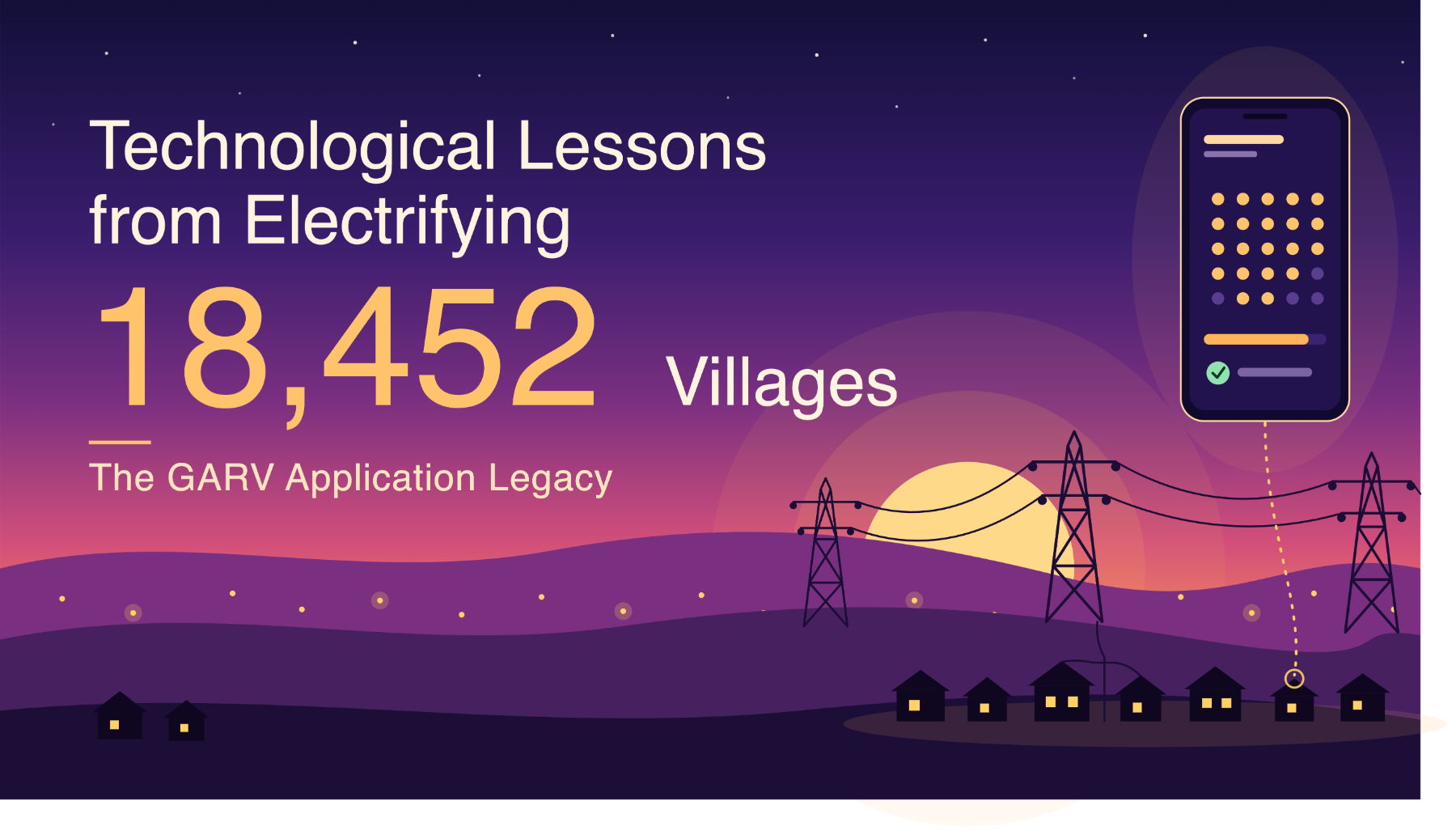
Between 2013 and 2017, serving as an Electrical Engineer and District Vidyut Abhiyanta (DVA) under the Ministry of Power, I had the privilege of contributing to one of the world's largest infrastructure monitoring programs: the electrification of 18,452 un-electrified villages across India.
1. The Challenge of Remote Transparency
Prior to the GARV (Grameen Vidyutikaran) application, tracking sub-station construction, HT/LT line erection, and last-mile village energization relied on slow weekly paper reports from remote districts.
To solve this, the Union Power Ministry introduced GARV—a custom mobile application equipped with:
- Offline Offline Data Capture: Allowing field engineers in non-network zones to record photos, GPS coordinates, and milestone stage sign-offs.
- Automated Sync: Uploading verified audit trails whenever 2G/3G connectivity was restored.
- Public Dashboard: Publishing daily energization counts directly to citizens and news media.
2. Key Engineering Insights
- Standardized BOQs & SLDs: Preparing accurate Single Line Diagrams (SLDs) and Bill of Quantities (BOQs) upfront minimized material wastage by 15%.
- 3rd Party Quality Inspections: Rigorous testing of transformers, conductors, and circuit breakers prevented early grid failure in harsh rural environments.
- Cross-Agency Coordination: Synchronizing efforts between state DISCOMs, central PMC teams, and local panchayats accelerated project completion timelines.
3. Legacy and Impact
The transparent digital framework established by GARV set the stage for subsequent mega-schemes like Saubhagya and today's RDSS Smart Metering drive.
Comments
No comments yet. Be the first to share a thought.